 Mycelia Monastery
When Going to a Clinic Isn’t an Option
Sarah’s alarm went off at 4:45 AM. Not to exercise or catch a flight. To drive 40 minutes to her local methadone clinic, wait in line for 30 minutes, dose by 6:30 AM, then rush back to drop her kids at school before her 9 AM shift started.
She did this every single day for eight months. Until her boss pulled her aside and asked why she was always late.
“The commute was killing me,” she shared in her review. “Too many people are on too narrow time frames to have staff just say ‘nothing we can do, you just have to wait’ when you literally can’t wait because of work. Online care would have saved my job.”
Sarah’s story isn’t unique. It’s the reality for thousands of people trying to balance recovery with the actual demands of life.

The Treatment Access Problem in America
According to SAMHSA, only about 10% of people with substance use disorders receive any treatment at all. The biggest barriers aren’t lack of desire or even cost. They’re practical logistics.
Geography creates massive gaps in care. Rural areas often have no nearby treatment centers, forcing people to drive two or three hours each way. Public transportation rarely reaches these facilities, and many communities exist in what experts call “treatment deserts” with no local specialists for specific substances.
Time presents another nearly impossible barrier. Most people can’t take time off work without losing their job. Clinic hours conflict with work schedules, and childcare responsibilities make daytime appointments unrealistic. School runs and caregiving commitments fill the margins where appointments might fit.
Privacy concerns keep countless people from seeking help. The fear of being seen at a local clinic becomes paralyzing in small towns where everyone knows everyone. Professional reputation concerns loom large, and stigma in tight-knit communities creates real consequences.
One review captured this perfectly: “The thought of going to a local rehab was daunting. I was embarrassed initially. Online treatment allows me to handle my issues without the fear of running into a neighbor or colleague.”
What Online Addiction Treatment Actually Is
Online treatment isn’t a video chat with a therapist once a week. Modern virtual care offers comprehensive recovery programs that rival in-person services.
Medical services form the foundation. Physician consultations handle medication management, including prescription of FDA-approved medications like Suboxone and naltrexone. Doctors monitor progress, adjust doses, and treat co-occurring mental health conditions, all through secure video platforms.
Therapeutic services provide the psychological support that makes recovery last. Individual therapy sessions use evidence-based approaches like CBT, DBT, and motivational interviewing. Group therapy and support sessions create community. Family therapy and couples counseling repair damaged relationships. Specialized trauma therapy addresses the root causes that often drive addiction.
Support services solve the practical problems that derail recovery. Case management coordinates care across providers. Insurance navigation assistance removes financial confusion. Employment and disability support helps protect your career. Alumni programs and peer support maintain connection after initial treatment ends.
Educational components teach skills for lasting recovery. Relapse prevention training identifies triggers and builds coping strategies. Life skills development addresses the practical challenges of sober living. Stress management techniques and healthy coping strategies replace substances with sustainable alternatives.
The Science: Does Online Treatment Actually Work?
The DEA extended telemedicine flexibilities through December 2026 for a reason: the evidence shows it works.
Research findings consistently demonstrate higher retention rates with virtual programs. Studies show 60 to 70 percent retention compared to 40 to 50 percent for in-person treatment. Patients stay in treatment longer when logistics are removed. Fewer appointments get missed due to transportation issues.
Recovery outcomes match or exceed in-person treatment across multiple studies. Medication compliance often runs higher because picking up prescriptions becomes easier. Patient satisfaction scores consistently rank high. The unique benefits extend beyond just matching in-person results.
Virtual care increases access for underserved populations who never had options before. People can continue treatment during life transitions like job changes or moves. Immediate crisis support becomes available through telehealth platforms. Greater flexibility allows treatment to work around jobs and family obligations instead of forcing impossible choices.
According to NIDA research, online treatment is not just a “backup plan.” For many people with busy professional lives, it’s actually more effective because it increases retention by removing the stress of commuting and schedule conflicts.
Real Stories: What 1,500+ Patients Say About Virtual Care
Our analysis of reviews from traditional clinics revealed that logistical barriers were the main reason for dropout and relapse. Here’s what people who switched to online care experienced.
The work-life balance transformation changed everything for people who couldn’t reconcile treatment with employment. “I am being discharged tomorrow and feel like a million dollars. They have signed me up for Telehealth and early morning Smart meetings as I begin full-time work again.”
This is what quality online care enables: recovery that fits around your life instead of forcing you to choose between treatment and survival.
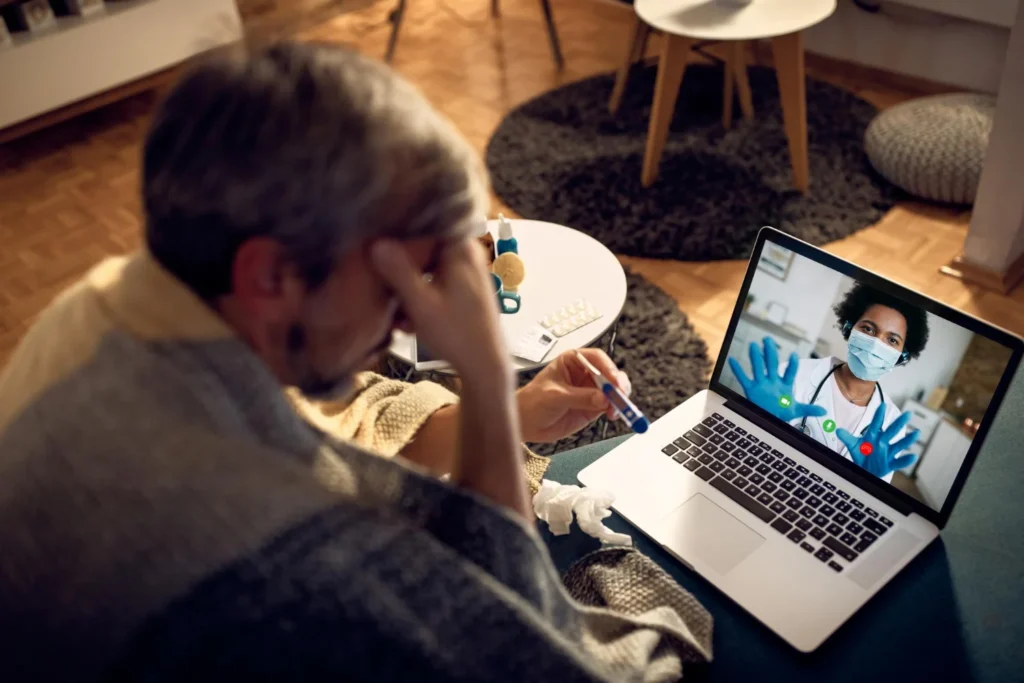
Privacy protection matters deeply in certain communities. “The thought of going to a local rehab was daunting. I was embarrassed initially. Online treatment allows me to handle my issues without the fear of running into a neighbor or colleague.”
In small communities or tight professional circles, virtual care protects your confidentiality while still providing comprehensive support.
Geographic access opens doors for people who had no options. “They went out of their way to get my clothes from my previous living situation that was over a 2-hour drive away. If I had known about Telehealth earlier, I wouldn’t have been so isolated.”
For people in rural areas or treatment deserts, online care literally makes the difference between getting help and going without.
The ongoing connection prevents the isolation that often leads to relapse. “I miss those online meetings on Tuesdays. Having them was a friend… not having them definitely affected me.”
Quality online programs don’t just offer individual sessions. They create community through virtual group meetings, alumni support, and peer connections.
Who Benefits Most from Online Treatment
Virtual care isn’t right for everyone, but it’s ideal for specific situations.
Working professionals find online treatment fits their reality. Sessions happen during lunch breaks or after hours, with no need to explain clinic absences to employers. Career momentum continues uninterrupted while accessing specialists not available locally.
Parents and caregivers can finally get help without impossible scheduling. Sessions fit while kids are at school, eliminating childcare challenges. Flexibility around family schedules means no choosing between your recovery and your responsibilities.
Rural residents gain access to specialists who might be hours away by car. No long commutes eating up entire days. The same quality care available in urban centers reaches remote areas. Connection to broader recovery community overcomes geographic isolation.
People with transportation barriers no longer face an impossible obstacle. No car required, no public transit limitations, no weather concerns, and reduced financial burden from travel costs.
Privacy-concerned individuals protect their professional reputation. No risk of being seen at a local clinic. Small town anonymity stays intact. Reduced stigma and judgment make seeking help possible.
The 7-Point Online Treatment Quality Checklist
Not all virtual programs are created equal. Our analysis of patient frustrations revealed exactly what to look for.
First, verify proper licensing and credentials. Physicians must be licensed in your state, and programs should be accredited by CARF or Joint Commission. Staff credentials should be clearly listed, and the program needs DEA registration for prescribing controlled substances.
Second, ensure comprehensive medical services beyond just prescriptions. You need access to all FDA-approved medications including Suboxone, methadone alternatives, and naltrexone. Regular physician check-ins matter, not just automated refills. Treatment for co-occurring mental health conditions should be standard, with clear emergency protocols for crisis situations.
Third, demand real therapy alongside medication. Individual counseling sessions with licensed therapists using evidence-based approaches like CBT, DBT, and motivational interviewing. Group therapy options should exist. Family and couples counseling availability signals comprehensive care.
Fourth, the technology must actually work reliably. HIPAA-compliant platforms, not regular Zoom or Google Meet. Phone-only options when internet fails. A mobile app for easy access. Technical support available 24/7 when things go wrong.
Fifth, pharmacy coordination should be seamless. Prescriptions get sent to your local pharmacy with same-day or next-day medication availability. Insurance coordination gets handled for you, and cash-pay patients receive clear pricing upfront.
Sixth, case management and support make the difference between success and struggle. “My Case Manager put me at ease, helping me through the process of obtaining State Disability through my job while I was in treatment.”
This level of support should be standard, not exceptional. You need a dedicated case manager, help with insurance and disability paperwork, employment accommodation assistance, and ongoing care coordination.
Seventh, community and ongoing connection prevent the isolation that leads to relapse. Alumni programs and virtual meetings keep you connected. Peer support groups provide ongoing encouragement. Regular check-ins after initial treatment and crisis support when needed.
“I miss those online meetings on Tuesdays. Having them was a friend… not having them definitely affected me.”
Understanding Treatment Levels: Can Your Needs Be Met Online?
The American Society of Addiction Medicine (ASAM) defines different levels of care. Here’s what can and cannot be done virtually.
Early intervention services work perfectly online. Educational sessions, risk assessment, motivational interviewing, and prevention services all translate effectively to virtual platforms.
Standard outpatient services thrive in virtual format. Weekly therapy sessions, medication management, recovery monitoring, and support groups all work well remotely.
Intensive outpatient programs now operate successfully online. Nine or more hours of therapy per week, structured programming, group and individual sessions, and comprehensive treatment all happen virtually.
Partial hospitalization presents a mixed picture. Twenty or more hours per week of programming may require some in-person components. Medical monitoring might necessitate clinic visits depending on your situation.
Residential treatment cannot be replicated virtually. The 24/7 structured environment requires physical presence. This level of care simply needs you to be there.
Medically managed detox must happen in person. Dangerous withdrawal requiring medical supervision can’t be done remotely. Hospital or detox facility care becomes necessary. Life-threatening complications make this non-negotiable.
Your specific situation determines what level you need. If you’re stable and working, Level 1 online care works ideally with weekly therapy and medication management fitting around your schedule. If you need daily support, Level 2.1 virtual intensive outpatient works well with evening sessions in three-hour blocks while maintaining employment. If you’re in active withdrawal, Level 4 in-person detox comes first, then transition to online care for ongoing treatment. Never attempt dangerous detox alone.
The Medication Question: What Can Be Prescribed Online
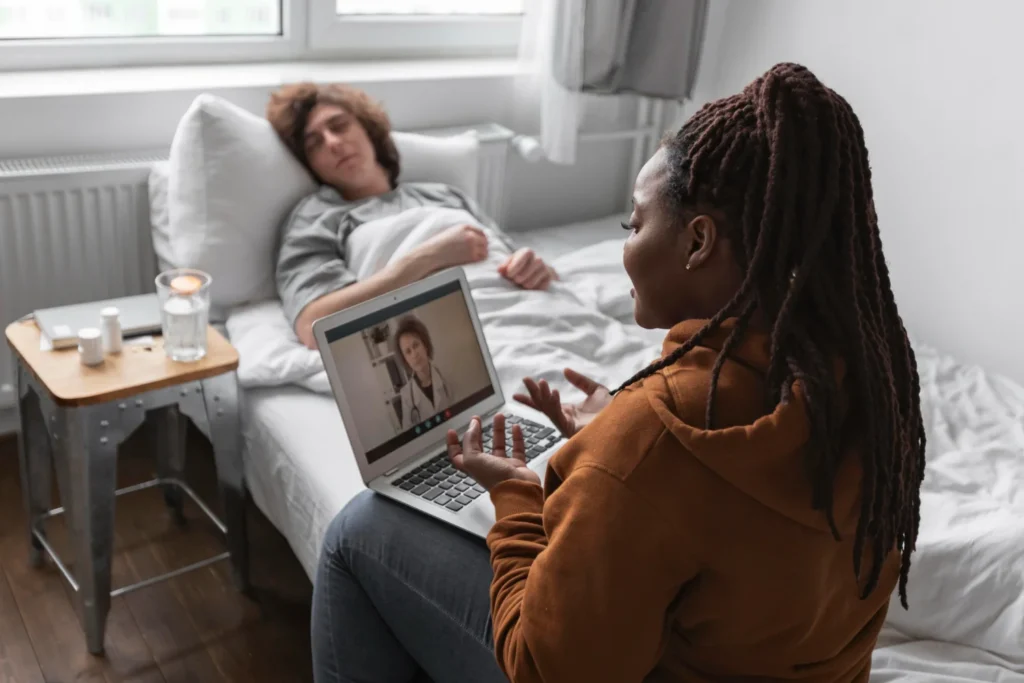
One of the biggest questions about virtual treatment: can you get the same medications online that you’d get in person?
Following DEA extensions of telemedicine flexibilities, physicians can now prescribe controlled substances online, including medications that make recovery possible for many people.
For opioid addiction, buprenorphine (Suboxone) can be prescribed after a video evaluation. Naltrexone (Vivitrol) in both oral and injectable forms gets prescribed online. Methadone still requires in-person clinic visits in most areas, though certain programs offer exceptions.
For alcohol addiction, naltrexone, acamprosate, and disulfiram (Antabuse) are all available through virtual care.
For anxiety and benzodiazepine issues, non-controlled alternatives can be prescribed online. Benzodiazepines themselves generally require in-person care, though tapering programs may have different protocols.
The important limitation to understand: methadone for opioid addiction still requires daily in-person visits to certified clinics in most cases. However, stable patients may qualify for take-home doses, and some pilot programs are testing virtual methadone access.
What Online Treatment Costs (And How to Pay)
Average costs for virtual programs vary by level of care.
Level 1 outpatient typically runs $100 to $300 per week for one to two sessions weekly, with medication costs additional.
Level 2.1 intensive outpatient usually costs $350 to $600 per week for nine or more hours of programming with more comprehensive services.
Medication-assisted treatment breaks down into physician consultation at $75 to $200, monthly medication at $150 to $300 depending on insurance, and therapy sessions at $75 to $150 each.
Most insurance plans cover telehealth addiction services at the same rate as in-person care. Mental Health Parity Law requires equal coverage. Check if your provider is in-network, as some plans require prior authorization. Copays typically match in-person visits.
Many online platforms offer subscription models for cash-pay patients. Monthly membership usually runs $99 to $299 with unlimited messaging with your care team, regular video sessions included, and medication prescriptions included.
How to Start: Your First 48 Hours
Getting started with online treatment is simpler than traditional clinic enrollment.
During the first hour or two, you make initial contact by calling or filling out an online assessment. A brief screening takes 10 to 15 minutes. Insurance verification happens if applicable. Your first appointment gets scheduled, often same-day or next-day.
Within the first 24 hours, your first appointment happens via video consultation with a physician or therapist. Medical history and assessment get completed. A treatment plan gets developed together. Medications get prescribed if appropriate.
By hour 48, you’re getting started actively. Pick up medications at your local pharmacy. Download the app and set up your account. Schedule follow-up appointments. Join support groups or alumni meetings.
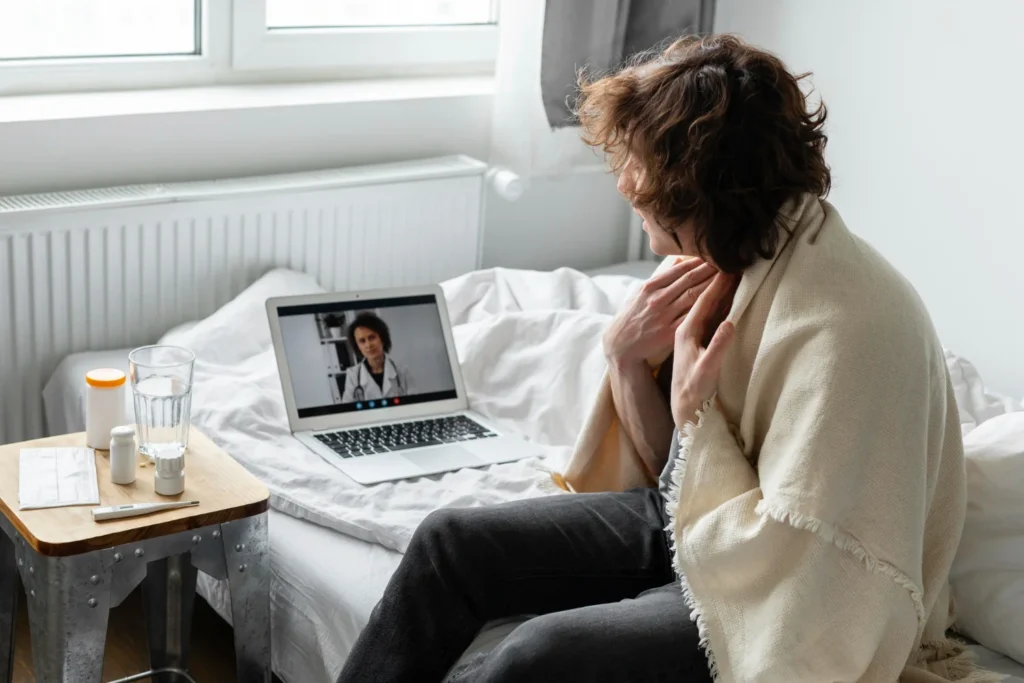
Person’s first online therapy session setup
Making It Work: Practical Tips for Virtual Recovery Success
Creating your recovery space matters more than you might think. Designate a quiet area for sessions where you won’t be interrupted. Use headphones for privacy. Ensure reliable internet connection, and have a backup plan using your phone if tech fails.
Schedule like it’s in-person treatment. Block your calendar for sessions and treat appointments as non-negotiable. Inform household members about your privacy needs. Eliminate distractions during therapy by silencing phones and closing other programs.
Stay connected to community even though you’re online. Join virtual alumni groups and attend online support meetings. Connect with peers through forums. Participate actively in group sessions rather than just watching.
Track your progress using whatever tools work for you. Use app features for mood tracking if available. Journal about your recovery journey. Celebrate milestones with your care team. Reach out when struggling instead of waiting until crisis hits.
Maintain routine because structure supports recovery. Keep consistent session times and regular medication schedules. Do daily check-ins with an accountability partner. Practice self-care between appointments.
The Bottom Line: Rebuilding Sanity From Home
Recovery isn’t about where you get treatment. It’s about getting the right treatment for your unique situation.
“They build your self-esteem and give you the tools to stay sober. Thank you to everyone… I will never forget anyone of you. I left with a toolbox of life skills to help me get back to sanity.”
That’s the goal, whether you’re sitting in a clinic or logging in from your living room: getting back to sanity. Building a life worth living. Becoming the person you want to be.
“They have signed me up for Telehealth and early morning meetings as I begin full-time work again. I feel like a million dollars.”
For many people in 2025, online treatment makes recovery possible when it wouldn’t be otherwise. It removes the barriers that have kept millions from getting help.
Immediate Resources: Getting Help Right Now
If you’re ready to look into online treatment, several resources can help right now.
SAMHSA National Helpline at 1-800-662-HELP (4357) provides free, confidential support 24/7. They can help you find local and online resources with information in English and Spanish.
Crisis Text Line responds when you text 988. You’ll connect with a trained counselor immediately, available 24/7 via text.
Find online treatment by visiting findtreatment.gov where you can filter specifically for telehealth providers, see what insurance they accept, read reviews and ratings, and contact providers directly.
Mycelia Monastery offers free consultations where we’ll help you evaluate online options, connect you with quality virtual programs, and provide ongoing support and care coordination. No cost, no obligation.
Frequently Asked Questions
Is online treatment as effective as in-person?
Research shows comparable or better outcomes for online treatment, primarily because people stay in treatment longer when logistics are removed. The key is finding a quality program with comprehensive services.
Can I get the same medications online?
Yes, most FDA-approved addiction medications can be prescribed via telehealth, including Suboxone for opioid addiction and naltrexone for alcohol. Methadone still requires in-person visits in most areas.
Will my insurance cover online treatment?
Most insurance plans cover telehealth addiction services at the same rate as in-person care due to mental health parity laws. Check with your specific plan about coverage details.
What if I need detox first?
Dangerous detox, especially from alcohol or benzodiazepines, must be done in person with medical supervision. After detox, you can transition to online care for ongoing treatment.
How do I know if an online program is legitimate?
Look for proper licensing, board-certified physicians, HIPAA-compliant platforms, comprehensive services beyond just medication, and transparent pricing. Avoid programs that prescribe without proper evaluation.
Related Resources
Continue learning about your treatment options:
- Complete Addiction Treatment Guide to understand all your options for recovery
- Opiate Addiction Treatment for specific guidance on opioid use disorder
- How to Help Someone With Addiction written for family members and loved ones
- Best Substance Abuse Treatment Centers to learn quality evaluation criteria
About This Article
This guide is based on analysis of 1,500+ patient reviews, current telemedicine regulations through 2026, clinical research from NIDA and SAMHSA, and expert consultation with addiction medicine specialists.
Last updated: January 2026
Part of: Addiction Treatment Centers Guide Series